

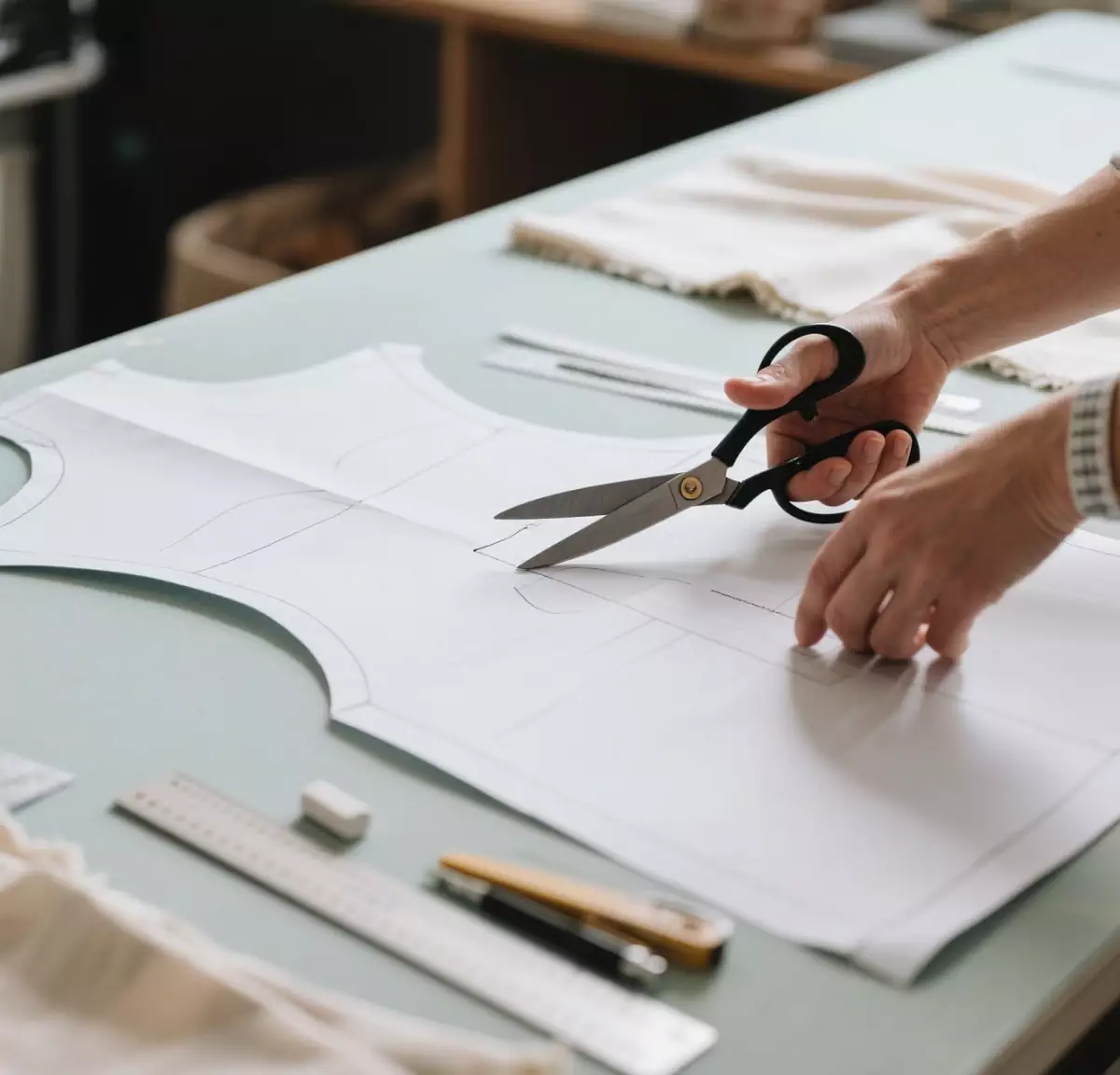
Pattern making is the foundational process of translating design ideas into precise, wearable templates that guide every stage of clothing manufacturing. Whether you’re a new designer, small brand owner, or someone curious about how garments come to life, mastering pattern making is essential to creating well-fitting, consistent, and production-ready apparel. In this guide, we’ll break down the core steps, industry-standard methods, and practical tools behind pattern making, while showing how professional practices like those at Greendimple elevate custom clothing production from concept to finished product.
1、What Is Pattern Making in Fashion?
1.1 Definition of Pattern Making
Pattern making involves the craft and technique of designing flat paper or digital templates, known as patterns, which outline the shape, dimensions, and construction of each part of a garment. These patterns serve as the foundation for cutting fabric, stitching, and assembling clothing, connecting a designer’s initial sketch to the finished wearable item. It combines creative design and technical production to turn every style from an idea into a finished manufactured product with precision.
1.2 Why Pattern Making Is Essential in Garment Manufacturing
Ensure precise dimensions: The meticulously designed templates can guarantee a consistent fit across different sizes, thereby reducing customer returns and dissatisfaction.
Enhance production efficiency: Clear and standardized templates can simplify the cutting and sewing processes, reducing waste and production time.
Guarantee consistency: Uniform templates can ensure that each piece of clothing in a batch is consistent with the original design, which is crucial for brand image and quality control.
Support scalability: Whether it’s small-batch custom orders or large-scale production, a powerful template is the foundation for scalable clothing manufacturing.
At Greendimple, our approach to garment pattern development prioritizes precision and adaptability, making it easy to bring custom designs to life while maintaining the highest standards of fit and quality.
2、The Basic Steps of Pattern Making
2.1 Step 1 – Taking Accurate Body Measurements
Accurate measurements are the cornerstone of successful draft making. For custom apparel, this involves capturing key body dimensions (chest, waist, hip, shoulder width, sleeve length, etc.) to create patterns tailored to individual or standard size specifications. Even small measurement errors can lead to ill-fitting garments, so precision is non-negotiable—especially for brands like Greendimple that specialize in custom clothing manufacturing.
2.2 Step 2 – Creating the Basic Block (Sloper)
The basic block, also known as a sloper, is a simple, close-fitting pattern that acts as the starting point for all subsequent designs. It is a plain draft without any style elements such as darts or pleats, tailored to fit a particular body shape or size range. Once you perfect the master block, you can adjust it to create countless styles — such as t-shirts, blouses, and dresses — while preserving core fit and structure.
2.3 Step 3 – Drafting the Pattern
Pattern drafting entails starting with a basic template and altering it to fit a particular design by adding style lines, changing necklines, inserting darts, or including pleats and gathers. This process demands a thorough knowledge of how fabric drapes and how garments are constructed, since each modification affects the fit and movement of the finished garment. In digital workflows, this is typically done using CAD software, whereas traditional techniques rely on paper and rulers.
2.4 Step 4 – Making a Sample Garment
Before mass production, a sample garment (usually made from inexpensive muslin or test fabric) is sewn from the draft pattern. This sample is tested for fit, comfort, and design accuracy, revealing any adjustments needed before finalizing the draft. At Greendimple, our sample development process is rigorous, ensuring every custom apparel design. meets client expectations before moving to full production.
2.5 Step 5 – Pattern Adjustment and Grading
Following sample testing, the draft is adjusted to correct fit problems. For producing multiple sizes, pattern grading is applied by enlarging or reducing the master draft to generate a complete size range (XS–XXL), ensuring the original fit and proportions are maintained. Accurate grading is essential for inclusive sizing and uniform quality throughout all sizes.
3、Common Pattern Making Methods Used in the Fashion Industry
3.1 Flat Pattern Making
The most widely used method in industrial apparel production, flat draft making starts with a basic block and uses paper or digital tools to modify and manipulate the template. It’s efficient, scalable, and ideal for mass production, making it the go-to choice for most clothing manufacturers, including Greendimple’s garment production process.
3.2 Draping Technique
Draping involves shaping fabric directly on a dress form to create a three-dimensional draft, often used for high-end fashion, tailored garments, and complex silhouettes. It allows designers to visualize how fabric falls and moves, but is more time-consuming and less scalable than flat draft making—best suited for custom, small-batch designs.
3.3 Digital Pattern Making (CAD)
Modern apparel manufacturing increasingly relies on digital draft making (CAD) tools. These software platforms let draft makers draft, edit, and grade patterns digitally, reducing errors, speeding up revisions, and integrating seamlessly with cutting machines and 3D design tools. For brands focused on efficiency and precision, like Greendimple, digital pattern making. is a key part of streamlining custom production workflows.
4、Tools and Software Used for Pattern Making
4.1 Traditional Pattern Making Tools
Pattern rulers and curves: French curve ruler, hip curve ruler, and straight ruler, used for drawing precise lines and shaping draft components.
Measuring tape: Stretchable tape measure, used to obtain accurate body dimensions and clothing sizes.
Pattern paper and tracing paper: Thick paper for drawing, as well as tracing paper wheels and carbon paper for transferring draft details.
Scissors and cones: Tools used to mark notches, texture lines, and other key alignment points on the draft.
4.2 Modern Pattern Making Software
Fashion CAD software: Professional digital cutting and grading tools such as Gerber AccuMark, Lectra Modaris and Otiteks.
3D clothing design tools: Platforms like Clo3D enable designers to visually present patterns, conduct virtual fittings, and reduce the need for physical samples in a 3D format.
Affordable options: Free or low-cost tools like PatternMaster or Seamly2E, suitable for beginners and small brands that wish to adopt a digital workflow.
5、How Professional Clothing Manufacturers Handle Pattern Making
At Greendimple, our approach to pattern making sets us apart as a trusted custom clothing manufacturer:
Experienced pattern makers: Our team blends decades of industrial expertise with a focus on custom fit, tailoring every draft to your exact specifications and body types.
Accurate sample development: We prioritize thorough sample testing and fit adjustments, so clients can see and approve their design before full production.
Custom clothing production: Whether for private label, small-batch, or large-scale orders, our patterns are optimized for scalability, maintaining consistency across every size and style.
Quality control before mass production: Every final pattern undergoes rigorous checks to eliminate errors, ensuring smooth production and flawless finished garments.
This commitment to precision makes Greendimple a top choice for brands and designers seeking reliable OEM clothing manufacturer. services and custom apparel solutions.
6、Pattern Making Tips for Beginners
Start with basic blocks: Master the foundation before diving into complex designs—basic blocks are the building blocks of all pattern making.
Use muslin for testing: Cheap and versatile, muslin is perfect for making test samples and identifying fit issues without wasting expensive fabric.
Always double-check measurements: Small mistakes here can derail an entire pattern, so take time to verify every dimension.
Study fabric properties: Different fabrics drape and stretch differently—adjust your draft to account for fabric weight, stretch, and texture.
7、 Conclusion
Pattern making is the often overlooked foundation of fashion and apparel manufacturing. It turns creative concepts into wearable, consistent, production-ready clothing. Whether you are just starting out or a brand expanding custom production, understanding the techniques and processes of draft making is essential for success.
At Greendimple, we leverage decades of expertise in garment draft making. to deliver high-quality, custom apparel that fits perfectly and stands the test of time. If you’re ready to bring your design to life with professional private label clothing production, our team is here to guide you from draft to finished product.
Frequently Asked Questions (FAQ)
Pattern making is the process of creating templates for garment cutting and sewing.
Measure → make basic block → draft pattern → make sample → adjust and grade.
Flat pattern, draping and digital CAD pattern making.
No. You can start with basic paper tools; digital tools are for efficiency.
Grading scales one pattern to multiple sizes while keeping fit consistent.
We use professional pattern makers, strict sample testing and full QC before production.
Related articles
Learn how to create your own clothing patterns
Future of the Clothing Manufacturing Industry: 10 Trends to Watch in 2026
Nylon Fabric Explained: Origin, Properties, Performance & Applications
What are the softest fabrics for clothes?