
Starting a clothing brand involves a major challenge: locating and collaborating with a dependable manufacturer. Numerous new and existing brands begin production without fully grasping the entire process or knowing the right questions to pose to factories from the start—resulting in delays, quality problems, and unforeseen expenses. This clear guide explains the entire clothing manufacturing process and highlights essential questions to ask before approving production, helping you establish a seamless partnership and receive top-quality garments on time.
一、The Complete Clothing Manufacturing Process (Step-by-Step)
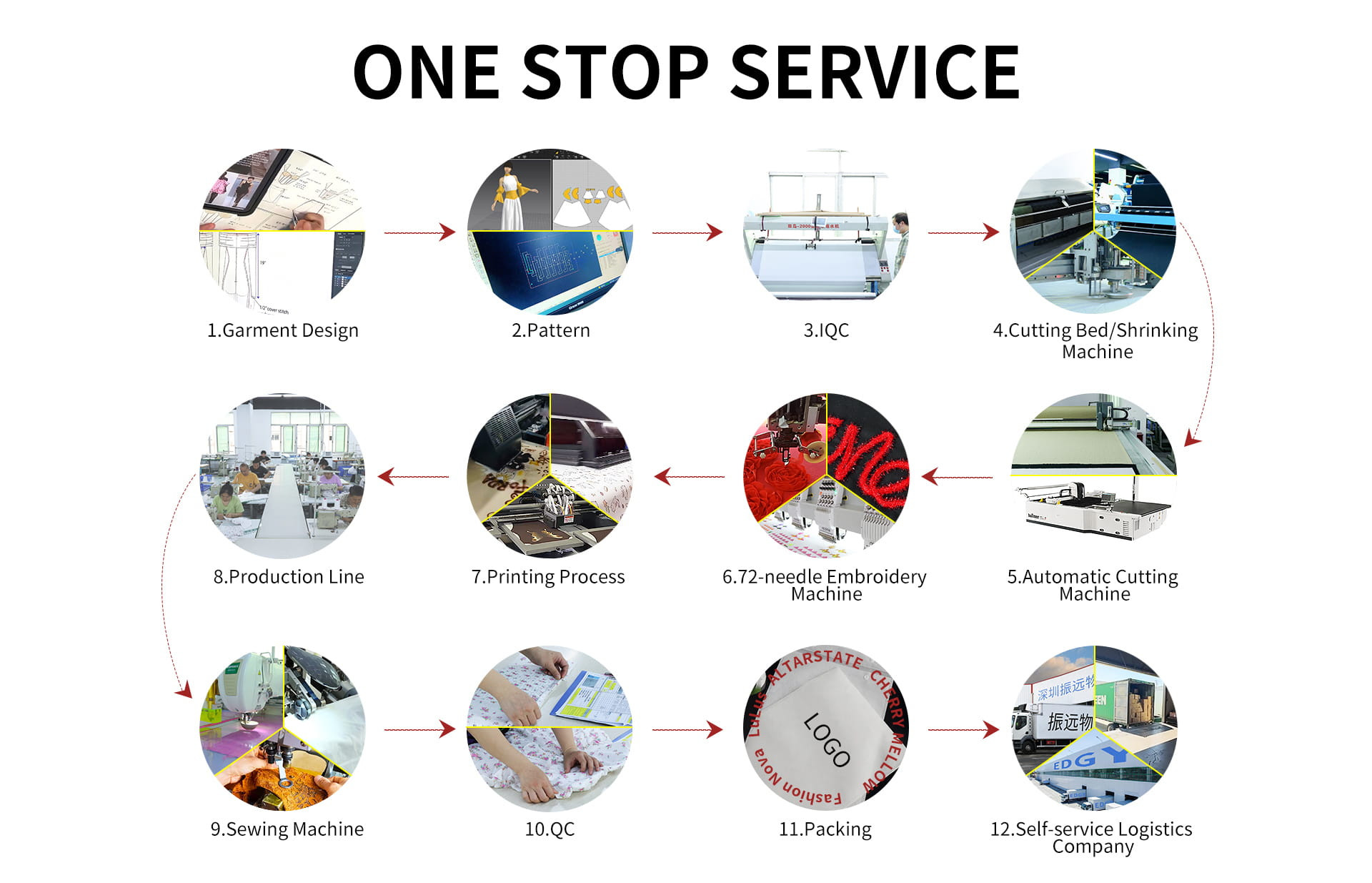
Each clothing manufacturing batch follows a steady, organized process. Understanding every step allows you to establish practical schedules, gather appropriate materials, and prevent misunderstandings with your factory.
1. Design & Product Development
This is the foundation of production—clear details here prevent costly changes later. Start by preparing a complete tech pack (the official blueprint for your garment), which includes design sketches, color specifications, stitching details, and construction notes.
For sustainable-focused brands like Greendimple, you may also include eco-fabric requirements and ethical production notes alongside standard fabric and trim selections (buttons, zippers, labels, linings), a detailed size chart, and fit requirements. Manufacturers use this package to assess feasibility, quote pricing, and plan production; vague or incomplete tech packs often lead to misaligned samples and costly rework.
2. Sampling & Prototyping
Sampling is non-negotiable—it’s your chance to test fit, fabric, and finish before bulk production. The factory will first create a first prototype sample for you to review. You’ll then request adjustments for fit, fabric, or design details, with multiple rounds of revisions until the sample matches your vision. Once approved, the factory makes a pre-production (PP) sample, the final approved version that will serve as the standard for all bulk garments. Never skip this step; it catches flaws early and locks in quality.
3. Bulk Production
After PP sample approval, full-scale production begins. The factory starts by sourcing and inspecting approved fabrics and trims to ensure consistency. Next, fabrics are cut to pattern specifications, then sewn into finished garments. Any custom details—like screen printing, embroidery, or heat transfers—are added during this phase. A reliable manufacturer includes in-line quality control (QC) at every step: checking fabric, stitching, and details mid-production to reduce defects before the batch is complete.
4. Packaging & Shipping
After production and final quality control are complete, your garments are readied for shipment. This process involves attaching custom brand tags, care labels, and hang tags, as well as packaging according to your requirements, such as poly bags, branded boxes, or bulk packing.
The factory will handle the shipping arrangements, whether it’s for domestic delivery or international freight (such as FOB, CIF, or other shipping terms). It’s important to discuss logistics early on to prevent customs delays or unforeseen shipping costs.
二、Key Questions to Ask a Clothing Manufacturer Before Hiring
Asking the right questions upfront filters out unreliable factories and aligns expectations. Focus on these non-negotiable topics to protect your brand and budget:
What is your minimum order quantity (MOQ)?
MOQ varies widely by factory—some specialize in small-batch production for startups, while others only accept large bulk orders. Make sure their minimum fits your inventory needs and budget, especially if you’re testing a new style or launching your first collection.
What are sampling costs and lead times?
Most factories charge for samples (and revisions), so ask for a clear sample fee breakdown and timeline for initial and revised samples. This helps you plan your product launch schedule and avoid rushed sampling that compromises quality.
What materials and customization options do you offer?
Confirm if the factory supports custom fabric sourcing, private labeling, and special finishes (printing, embroidery, dyeing). Ask if they provide fabric swatches and trim options upfront, and if they can accommodate your unique brand details without extra delays.
What is the full production lead time?
Obtain a detailed written schedule covering the whole process, from sample approval through to shipping. Make sure to include extra time to account for fabric delays or busy production periods, ensuring you meet your launch deadlines.
How does your quality control process work?
Ask about their QC checks (fabric inspection, in-line checks, final garment checks) and how they handle defective products. Clarify if they allow third-party QC inspections for extra assurance, and what their policy is for reworking flawed items.
三、Tips for a Successful Long-Term Manufacturer Partnership
- Communicate clearly and in writing: Document all design changes, deadlines, and requirements to avoid misinterpretation. Use your tech pack as the single source of truth.
- Start small for first orders: Test the factory with a small batch before placing large bulk orders. This lets you evaluate quality, speed, and communication without high risk.
- Prioritize long-term collaboration: Consistent, repeat orders often lead to better pricing, faster lead times, and priority production. Build trust with your manufacturer for a more seamless workflow over time.
四、Frequently Asked Questions (FAQ)
Essential Questions to Ask a Clothing Manufacturer
A: Confirm the minimum order quantity upfront; some UK factories set 2000+ pieces, while ethical makers offer small-batch MOQs (50-100 pieces) for startups. Ordering 150+ pieces often lowers per-unit costs, so ask about volume breaks.
A: Get a clear timeline from sample approval to shipping, and add a 2-week buffer for seasonal delays or material shortages to stay on track for launches.
A: Samples cost roughly double bulk pricing. Most UK manufacturers require a new customer deposit, with final payment due before shipping — clarify all fees and deadlines upfront.
A: Reputable factories run in-line and final QC checks, and share quality certifications. This ensures bulk orders match your approved pre-production sample.
A: Confirm custom brand tags, eco-fabric sourcing and sustainable packaging options — critical for eco-focused brands like Greendimple to keep brand identity consistent.
五、Conclusion
Working with a clothing manufacturer doesn’t have to be overwhelming. When you understand the production process and ask the right questions upfront, you can eliminate most common risks. A trusted factory becomes a true partner for your brand—whether you’re launching a startup line or scaling an established label like Greendimple—helping turn designs into market-ready garments efficiently.
Take time to vet manufacturers carefully, prepare detailed documentation, and prioritize transparency throughout the process. Doing so will help ensure consistent product quality and set your clothing line up for long-term growth.